
 Book Appointment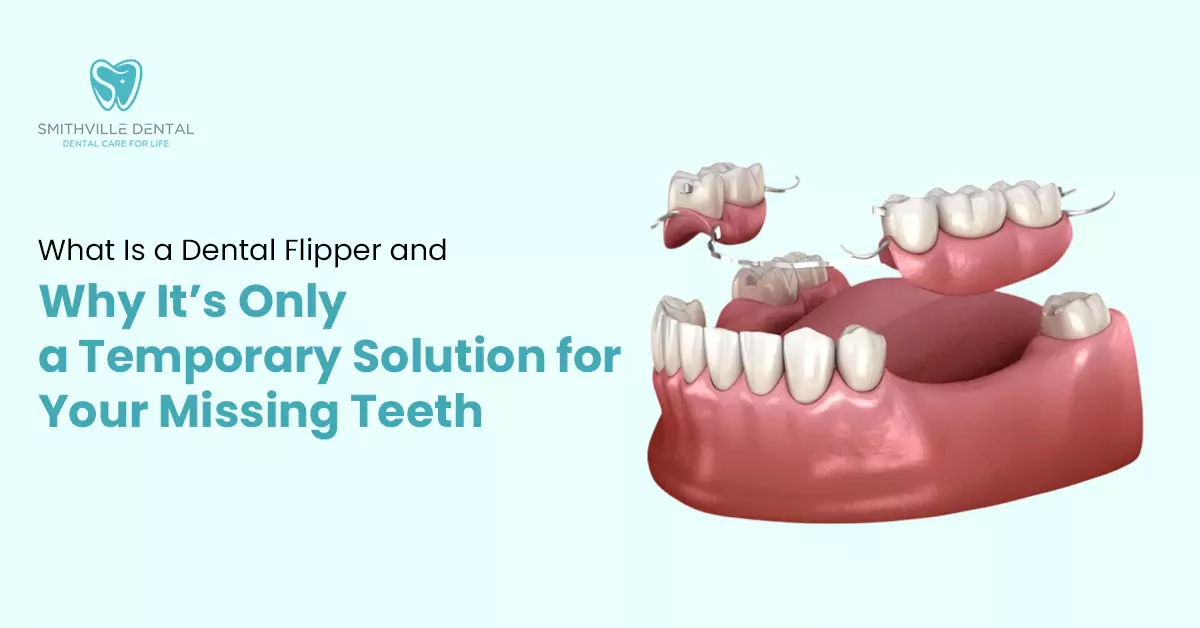
Losing a tooth dulls a bright smile making one shy to smile or makes it difficult to chew. Dental flippers are one quick way to fill that gap. But what is this dental flipper and why shouldn’t it be used for long? Let’s find out.
What Is a Dental Flipper?
A dental flipper is a removable, light and partial denture used to substitute for missing teeth. It is typically constructed from acrylic with a fake tooth attached. The flipper clasps onto your existing teeth, fills in the gap, and completes your smile.
How Does a Dental Flipper Work?
A dental flipper fills the space created by a missing tooth with an artificial tooth attached to a lightweight acrylic base. The appliance is designed to fit around your existing teeth and gums, helping restore the appearance of your smile.
Because a dental flipper is removable, you can take it out for cleaning and follow your dentist’s instructions regarding when to wear it. Its fit and comfort can vary from person to person, so professional evaluation is important to ensure that the appliance is appropriate for your situation.
What Are the Benefits of a Dental Flipper?
Dental flippers can provide several benefits when a temporary tooth replacement is needed. They are generally removable, can improve the appearance of a missing-tooth gap, and may provide a relatively quick option while you plan your next stage of treatment.
Some potential benefits include:
- Improved appearance: A flipper can fill the visible space caused by a missing tooth.
- Removable design: It can be removed for cleaning and according to your dentist’s instructions.
- Temporary solution: It may be useful while your mouth heals or while you plan a permanent restoration.
- No implant surgery: A flipper does not require surgical placement like a dental implant.
- Quick option: Depending on your individual needs and dental laboratory process, a flipper may be available relatively quickly.
What Are the Disadvantages of a Dental Flipper?
Although a dental flipper can be useful temporarily, it also has limitations. Because it is designed as a temporary appliance, it generally does not provide the same stability or function as a permanent tooth replacement.
Some potential disadvantages include:
- It may feel bulky or unfamiliar when you first wear it.
- It can move or become uncomfortable during eating or speaking.
- The acrylic material can break or become damaged with improper use.
- It requires regular cleaning and proper care.
- It does not replace the function of a natural tooth root.
If your dental flipper feels excessively loose, painful, or uncomfortable, speak with your dentist rather than adjusting or repairing it yourself.
Why Is a Dental Flipper Only a Temporary Solution?
Keep the existing bullet points, but replace them with:
A dental flipper is generally considered temporary because it is not designed to provide the same strength, stability, and long-term function as a permanent tooth replacement.
- Limited durability: The acrylic material can be damaged or broken, particularly with improper use.
- May feel less stable: Because it is removable, it may move more than a fixed restoration.
- Does not replace the tooth root: A flipper does not provide the stimulation to the jawbone associated with a natural tooth root or dental implant.
- Requires removal and cleaning: Proper daily care is important for maintaining oral hygiene and the condition of the appliance.
For these reasons, your dentist may recommend considering a longer-term option when you are ready.
How Long Does a Dental Flipper Last?
The lifespan of a dental flipper varies depending on the material, fit, how often it is worn, and how well it is maintained. Since a flipper is designed as a temporary appliance, it should not be viewed as a replacement for a permanent restoration.
Your dentist can check the fit and condition of your dental flipper during follow-up appointments. If it becomes cracked, damaged, loose, or uncomfortable, contact your dental office to determine whether it needs adjustment or replacement.
Can You Eat With a Dental Flipper?
You may be able to eat with a dental flipper, but your dentist may recommend starting with softer foods while you become accustomed to wearing it. Chewing carefully can help reduce pressure on the appliance.
Avoid biting directly into very hard or sticky foods if they could dislodge or damage the flipper. If eating remains uncomfortable or the appliance repeatedly moves, contact your dentist for an evaluation of its fit.
How Do You Clean a Dental Flipper?
Proper cleaning helps keep your dental flipper and mouth in good condition. Follow the specific instructions provided by your dentist, which may include:
- Remove the flipper as instructed.
- Rinse it after eating.
- Gently clean it using a denture-safe cleaning method.
- Avoid very hot water, which can affect the appliance’s shape.
- Store it properly when you are not wearing it.
- Keep up with your regular dental appointments so your dentist can check the appliance and your oral health.
Avoid using abrasive household cleaners unless your dental professional specifically recommends them.
What Are the Alternatives to a Dental Flipper?
If you need to replace a missing tooth for the long term, your dentist may discuss several alternatives.
Dental Bridges
A dental bridge is a fixed restoration that uses neighboring teeth to support an artificial tooth. It can provide a stable option for replacing certain missing teeth.
Dental Implants
Dental implants are designed to replace the root portion of a missing tooth and support a crown or other restoration. They can provide a stable, long-term tooth replacement option for appropriate candidates.
Dentures
Depending on how many teeth are missing, a partial or complete denture may be another option. Your dentist can determine which type of denture or tooth replacement is suitable for you.
Choosing the Right Replacement for a Missing Tooth
A dental flipper can be a convenient temporary option, but it may not be the best long-term solution for everyone. Depending on your oral health and treatment goals, a dental bridge, denture, or dental implant may provide a more lasting replacement.
If you are unsure which option is right for you, schedule a consultation with Smithville Dental. Our dental team can evaluate your smile and discuss appropriate options for replacing missing teeth.