
 Book Appointment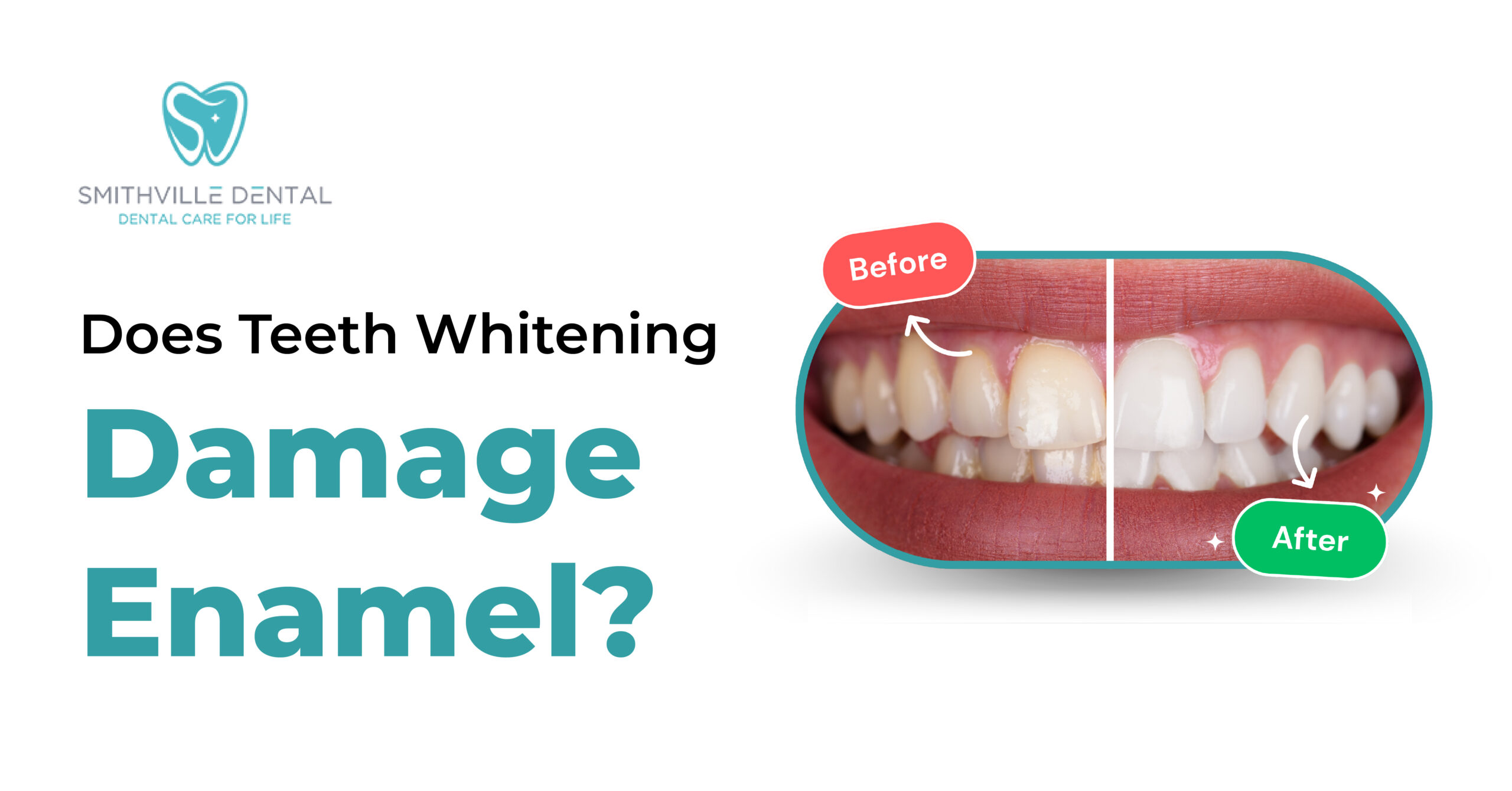
A brighter smile can boost confidence instantly. But let’s be real. If you’ve thought about whitening your teeth, you’ve probably worried about damaging the enamel. That’s a completely natural concern. Enamel protects your teeth. You don’t want to destroy it for the sake of a whiter look. So if you have ever wondered, “Does teeth whitening cause damage to enamel?”
Let us explain.
The truth isn’t as scary as it sounds. Whitening is safe if done properly, says Dr. The trick is understanding how it works and choosing the right way.
What’s Enamel and Why Should You Care?
Enamel is the outer layer of the teeth. It’s the hardest thing in your body. Just imagine it for a minute. It is a kind of armour. It protects the more sensitive inner layers of your tooth from decay and sensitivity.
In other words, once you damage the enamel, it doesn’t regenerate. That’s why people are suspicious of whitening products.
What Is Teeth Whitening?
Now on to the next point. Most whitening products contain ingredients such as hydrogen peroxide or carbamide peroxide. These agents break down stains on the surface and within the enamel.
Picture it like this. The whitening gel removes stains, it does not scrape away enamel.
And here’s the best bit. Professional teeth whitening procedures are carefully managed. Dentists adjust the strength to the lowest level that will still produce results.
And here’s where it gets interesting. Most enamel problems are caused by misuse, not treatment.
Is Teeth Whitening Bad for Enamel?
We know, internet searches can make it sound risky. But here’s the way it all fits together.
When done correctly under professional supervision teeth whitening will not cause permanent damage to enamel. Studies show whitening agents open tiny pores in enamel to release stains, but only temporarily. These pores are naturally remineralized by saliva over time.
In layman’s terms, this means that the effect is temporary and reversible.
However, overuse of store bought kits or too frequent application of products can lead to sensitivity and irritation. And that’s why professional advice matters.
Why Some People Are More Sensitive
If you’ve experienced a little sensitivity after whitening, you’re not alone.
That being said, let’s move on. Whitening can temporarily open tiny tubules in the tooth, causing short term sensitivity. That usually goes away in a few days.
It’s sensitivity, not a sign of enamel damage. It is a temporary reaction.
Appropriate use of desensitizing toothpaste or spacing treatments helps to manage discomfort.
Is It Safer to Get Professional Whitening?
If you’ve ever wonderedm, if dentist supervised whitening is worth it, let us explain.
Professional treatments provide customized trays, safe concentrations and also, careful monitoring. That lowers the risk of overdose.
If you’re after a brighter result, without needless worry, then it’s worth a go.
How to Whiten While Protecting Your Enamel?
- Stick to professional advice
- Don’t overdo the whitening sessions
- Keep good oral hygiene
- Reduce staining foods and drinks
- Schedule routine dental visits
Conclusion
And that is the moral of the story. Teeth whitening does not harm enamel when done correctly. The key is to use it responsibly and, with professional guidance. In conclusion, it all adds up like this. You can achieve a brighter smile, without sacrificing your dental health.
Thinking of whitening? For safe, professional care, book a consultation with Smithville Dental today.