
 Book Appointment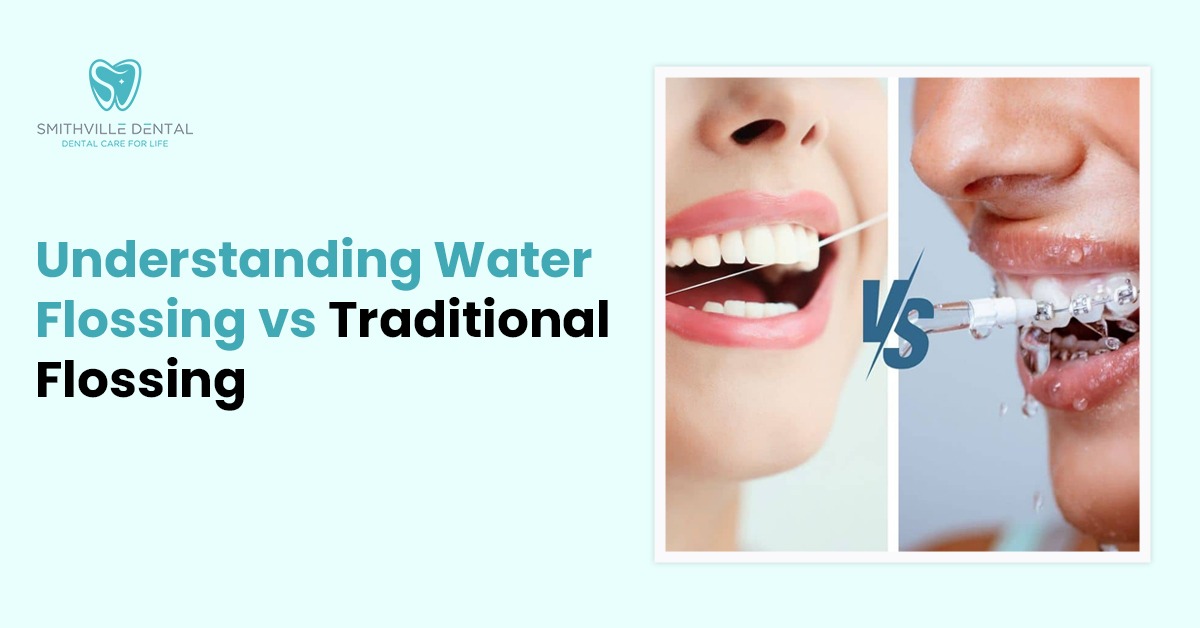
Flossing is an important part of taking care of your teeth. Brushing cleans the outside of the teeth, while flossing gets into the spaces between them and along the gumline. That’s where plaque and bits of food like to hide. For years, people have used regular flossing to deal with this. Water flossers, on the other hand, have recently become a simple and gentle option.
This blog explains the differences between the two methods, their pros and cons and how to choose the one that works best for you.
Traditional Flossing: The Classic Deep Clean
When you floss the old-fashioned way, you slide a thread made of nylon or Teflon between your teeth. The movement usually makes a “C” shape, which is good for cleaning below the gumline and getting rid of sticky plaque. If done right, this method lowers the risk of cavities, keeps gums healthy and fights bad breath.
A lot of people, though, think this method is hard. Some people have teeth that are too close together, while others have braces or can’t control their fingers well. Flossing in these situations can make your gums hurt or bleed. That makes people less likely to use it regularly. String floss is still one of the best ways to clean between teeth, though, for those who can handle it.
Water Flossing: A Modern Gentle Approach
A water flosser, also called an oral irrigator, uses a stream of pressurized water to get rid of food particles and bacteria. It works between the teeth and along the gumline without scraping them.
This method is great for people who have braces, implants or bridges. It also helps people whose gums are sensitive or who have joint problems. The water stream is soft and doesn’t need you to move your hands in complicated ways. Even though water flossing doesn’t scrape plaque the same way string floss does, it is known to make flossing easier, improve gum health and lower inflammation.
Which One Wins? A Side-by-Side Look
Here’s how the two methods compare:
- Removing Plaque: String floss usually gets rid of more sticky plaque.
- Comfort and Ease: Most people find it easier and more comfortable to floss with water.
- Health of the gums: Water flossers can help stop bleeding and swelling in the gums.
- Convenience: Water flossing is quicker and cleaner. Flossing with string takes more time and care.
Choosing Based on Your Needs
Each person’s mouth is different. Some people like traditional floss better because it gives them more control and a deeper clean. Some people prefer the ease and comfort of a water flosser. You might choose based on your braces, implants, hand mobility or sensitive gums.
The goal is still the same. To floss every day, no matter which method you like best. Regular work helps keep your teeth and gums healthy and your breath fresh.
Also Read – Brushing and Flossing 101
Take Charge of Your Oral Hygiene
Consistent flossing makes all the difference. There are pros and cons to both string floss and water flossers. The best choice is the one you use every day.
For professional dental care and help finding the best solution, go to Smithville Dental.You can always get personalized care and professional advice to keep your smile bright and healthy.